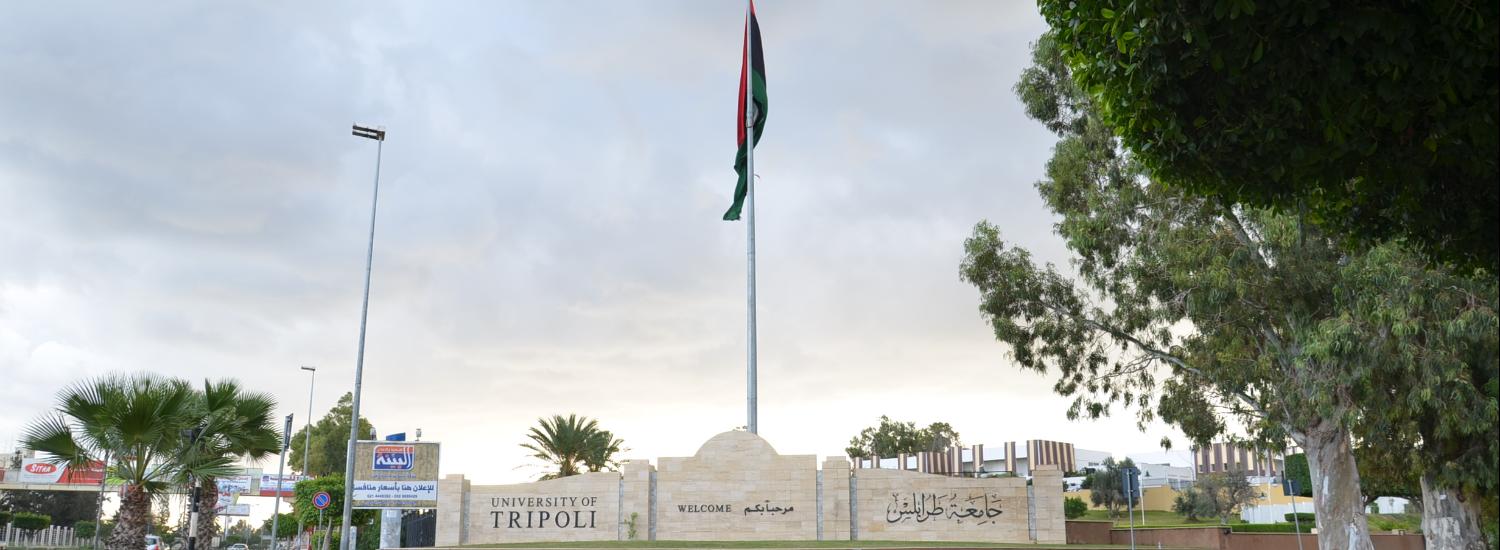
قسم الأدوية والسموم والطب الشرعي

المزيد ...

حول قسم الأدوية والسموم والطب الشرعي

حقائق حول قسم الأدوية والسموم والطب الشرعي

نفتخر بما نقدمه للمجتمع والعالم

20

المنشورات العلمية

7

هيئة التدريس

من يعمل بـقسم الأدوية والسموم والطب الشرعي

يوجد بـقسم الأدوية والسموم والطب الشرعي أكثر من 7 عضو هيئة تدريس

staff photo

أ.د. مروان مصطفي علي دريد

مروان دريد هو احد اعضاء هيئة التدريس بقسم أدوية وسموم وطب شرعي بكلية الطب البيطر ابتداء من سنة 2008. يعمل السيد مروان مصطفي دريد بجامعة طرابلس كـأستاذ من 16 اكتوبر 2018 وله العديد من المنشورات العلمية في مجال تخصصه

منشورات مختارة

بعض المنشورات التي تم نشرها في قسم الأدوية والسموم والطب الشرعي

Neurally released ATP mediates endothelium-dependent hyperpolarization in the circular smooth muscle cells of chicken anterior mesenteric artery

The object of the present study was to clarify the neurotransmitter(s) controlling membrane responses to electrical field stimulation (EFS) in the circular smooth muscle cells of first-order branches of chicken anterior mesenteric artery. arabic 17 English 127
Marwan Draid(12-2005)
Publisher's website

Comparative Assessment of SepsiTest™ Platform to BactScreen™ and " in-house " MGB-based All Bacteria Assay for Detection of Bacteraemia in Whole Blood Samples

Several molecular techniques that are commercially described in the literature for early detection of blood stream infection in attempting to overcome the limitations of the gold standard blood culture. SepsiTest™ is aCE marked commercial platform that has been described in the literature. However, there were no studies addressing the accuracy of the test as a diagnostic platform for detection bacteraemia in whole blood samples. The study, conducted to investigate and discuss the strategy of SepsiTest™ in comparisonto our previously validated real-time PCR based assays (BactScreen™) and the previously published “in-house” minor groove binder (MGB)-based all bacteria assay. The three assays showed different sensitivity patterns for detecting bacteria in blood stream pathogens in favouring of using BactScreenTMtest. SepsiTest™ could be valuable but their lowest sensitivity in addition to their use of the unspecific SYBR Green fluoresce dye that question its diagnostic accuracy could be used as a last choice molecular diagnostic technique for detection of bacteraemia in whole blood samples. However, SepsiTest™ strategy rather, may provide useful diagnostic tool for detecting live pathogens in food technology arabic 32 English 130
Marwan Draid(12-2016)
Publisher's website

Effects of storage temperature on the quantity and integrity of genomic DNA extracted from mice tissues: A comparison of recovery methods

Efficient extraction of genomic DNA (gDNA) from biological materials found in harsh environments is the first step for successful forensic DNA profiling. This study aimed to evaluate two methods for DNA recovery from animal tissues (livers, muscles), focusing on the best storage temperature for DNA yield in term of quality, quantity, and integrity for use in several downstream molecular techniques. Six male Swiss albino mice were sacrificed, liver and muscle tissues (n=32) were then harvested and stored for one week in different temperatures, -20C, 4C, 25C and 40C. The conditioned animal tissues were used for DNA extraction by Chelex-100 method or NucleoSpin Blood and Tissue kit. The extracted gDNA was visualized on 1.5% agarose gel electrophoresis to determine the quality of gDNA and analysed spectrophotometrically to determine the DNA concentration and the purity. Both methods, Chelex-100 and NucleoSpin Blood and Tissue kit found to be appropriate for yielding high quantity of gDNA, with the Chelex100 method yielding a greater quantity (P < 0.045) than the kit. At -20C, 4C, and 25C temperatures, the concentration of DNA yield was numerically lower than at 40C. The NucleoSpin Blood and Tissue kit produced a higher (P=0.031) purity product than the Chelex-100 method, particularly for muscle tissues. The Chelex-100 method is cheap, fast, effective, and is a crucial tool for yielding DNA from animal tissues (livers, muscles) exposed to harsh environment with little limitations.
Huda H. Al-Griw, Zena A. Zraba, Salsabiel K. Al-Muntaser, Marwan M. Draid, Aisha M. Zaidi, Refaat M. Tabagh , Mohamed A. Al-Griw(8-2017)
Publisher's website