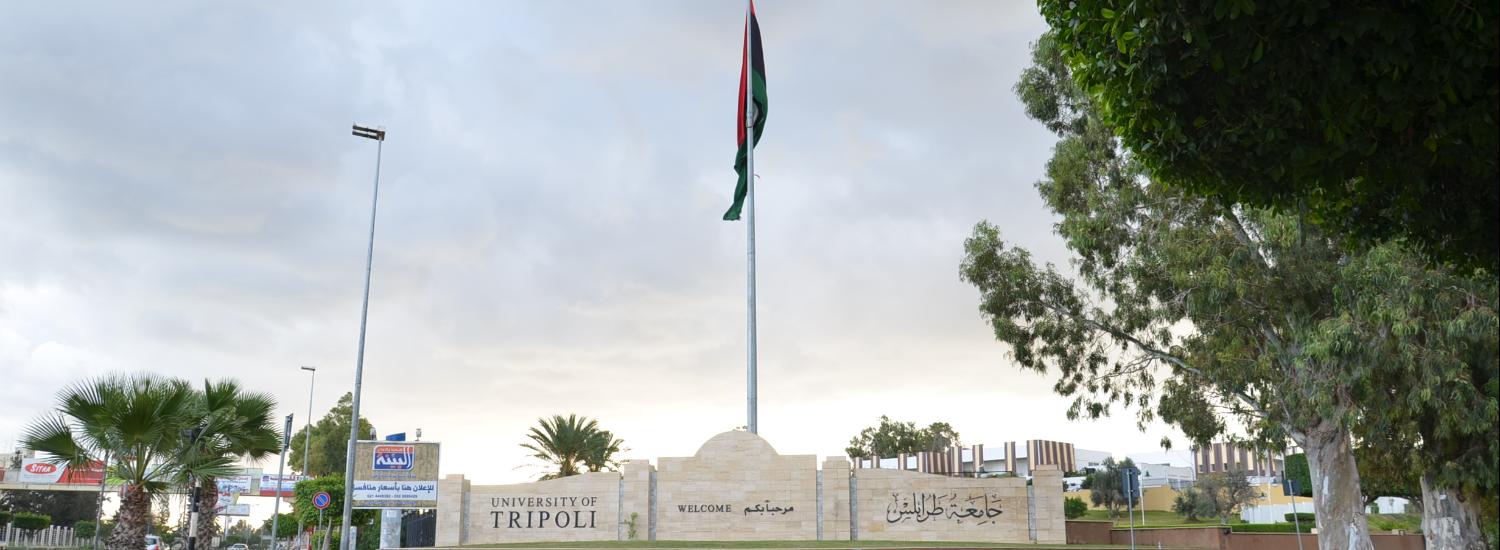
Department of Political science

More ...

About Department of Political science

Facts about Department of Political science

We are proud of what we offer to the world and the community

163

Publications

31

Academic Staff

127

Students

0

Graduates

Who works at the Department of Political science

Department of Political science has more than 31 academic staff members

staff photo

Mr. SALAH MUSTAFA ALAMEEN ALAJEELI

صلاح الامين هو احد اعضاء هيئة التدريس بقسم العلوم السياسية بكلية الإقتصاد طرابلس. يعمل السيد صلاح الامين بجامعة طرابلس كـمحاضر مساعد منذ 2014-09-08 وله العديد من المنشورات العلمية في مجال تخصصه

Publications

Some of publications in Department of Political science

الأيديولوجية والسياسة: دراسة في الأيديولوجيات السياسية المعاصرة

يستعرض هذا الكتاب البعدين النظري والحركي لأبرز الأيديولوجيات السياسية المعاصر، لاسيما الماركسية بفروعها المختلفة، والليبرالية، والقومية، والشمولية. وتتمثل مساهمتي في هذا الكتاب في الفصل المتعلق بالقومية كفكر وحركة في نفس الوقت. arabic 119 English 0
مصطفى عبد الله أبو القاسم خشيم, مالك محمد عبيد ابوشهيوة, , د. محمود محمد خلف(1-2003)
Publisher's website

تأثير العولمة على السياسة العامة الليبية للاستثمار

تمثل فوائض دخل النفط فرصة للاستثمار الخارجي وذلك بقصد تنويع مصادر الدخل في ليبيا. ولقد ساهمت العولمة في انتشارات الاستثمارات الخارجية في قارات العالم المختلفة. arabic 94 English 0
د. مصطفى عبدالله أبوالقاسم خشيم(1-2009)
Publisher's website

The Arab gender gap in the new millennium

By the year 2012, the Arab countries suffered from a serious gender gap ranged between 36 and 50%. This wide gender gap is due to several factors that reflected the internal and external milieus. The Arab states succeeded in the process of narrowing down the gap in the health and education spheres, but they obviously failed to do so in the economic and political empowerment. While the economic gender gap reached its peak in the case of Yemen with 49.5%, the lowest women political empowerment (0%) were recorded by Qatar and Saudi Arabia, respectively. In order to describe and analyze the Arab gender gap in the twenty-first century, two independent variables were examined, namely: human development and women empowerment. Theoretically, the gender gap is narrowed down to the maximum by the most human developed countries. But, the data of Human Development Reports (HDRs) and Gender Gap Reports (GGRs) showed that the Arab gender gap is similar in magnitude; therefore, further statistical analysis was required. Statistical analysis of HDRs and GGRs for the year 2012 demonstrated that the Arab Gender Gap (AGG) is more influenced by the level of women empowerment in human development process; thus, the HDIs affected the Gender Gap Index (GGIs) through an intervening variable, namely the Gender Inequality Index (GIIs). Consequently, the Arab states that achieved very high or just high Human Development Index (HDIs) were not necessarily treated women and men equally, especially in the economic and political areas, e.g., Qatar and Saudi Arabia. But, the Arab countries, which exhibited low or medium levels of HDIs and considerable scores of GIIs, succeeded in the process of narrowing down the GGIs to a degree that matched generally the Arab highly or very highly human developed states, e.g., Jordan and Mauritania. Regarding the future of AGG, business as usual scenario is expected to continue, which mean that the Arab states will not be able to change the negative into positive aspects, and shift the threats into opportunities in the near future. Keywords: Arab countries, Arab gender gap, gender gap index, human development index, gender inequality index. arabic 7 English 34
Mustafa A. A. Kashiem(1-2015)
Publisher's website