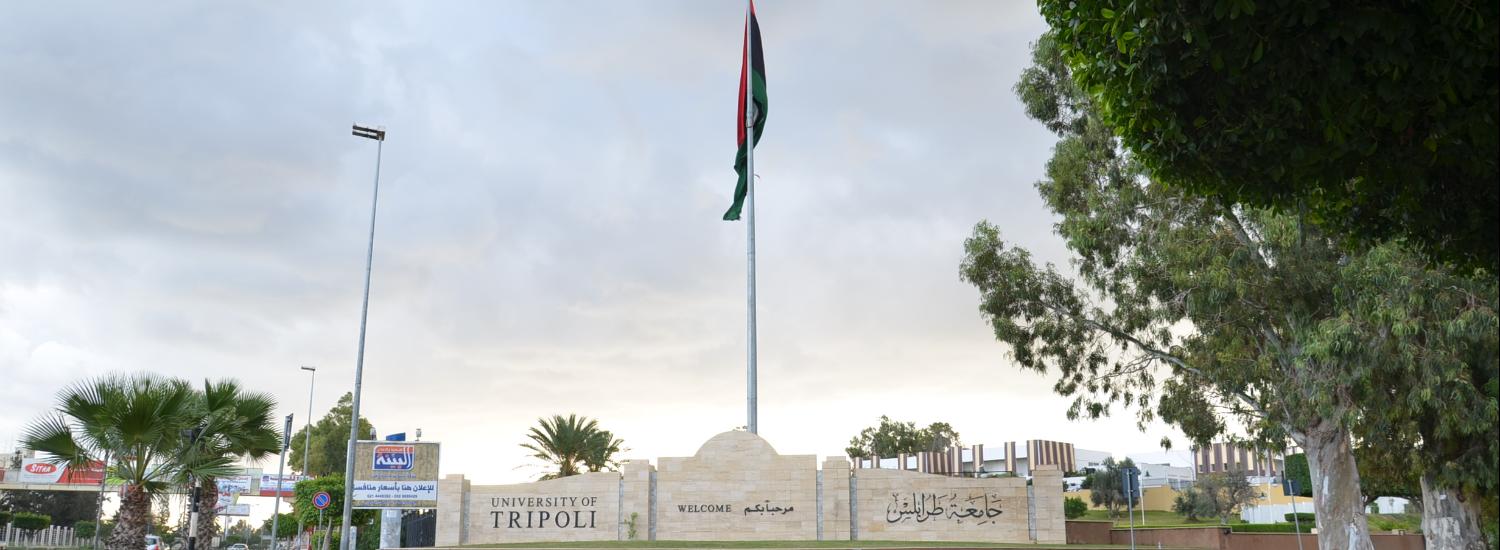
faculty of Education Bin Ghesheer

More ...

About faculty of Education Bin Ghesheer

The Faculty of Education is located within the municipality of Qasr bin Ghashir. It particularly covers the municipality’s need for teachers in various scientific disciplines. It was formed by the decision of the former General People's Committee Secretary No. (1386) of 1996. At the start, a Higher Institute for Teacher Education was established in Qasr bin Ghashir. The Institute aims to prepare graduates from the teachers that primary and secondary school institutions need. However, the General People's Committee (former) issued decision No. (118) of 2004 regarding the inclusion of higher institutes to universities and renaming them as teacher preparation colleges. Then, the Higher Institute for Teacher Education in Qasr Bin Ghashir joined the University of Tripoli to become the Faculty of Teacher Preparation. However, former people’s committee of the University of Tripoli issued decision No. (55) for 2009 to renaming the Faculties of Teacher Preparation to Faculties of Education. This includes the Faculty of Education, Qasr bin Ghashir. Its major aims was to work on preparing teachers scientifically and professionally in all scientific disciplines to meet the needs of Qasr Bin Ghashir Municipal Schools.

Facts about faculty of Education Bin Ghesheer

We are proud of what we offer to the world and the community

16

Publications

134

Academic Staff

1906

Students

0

Graduates

Who works at the faculty of Education Bin Ghesheer

faculty of Education Bin Ghesheer has more than 134 academic staff members

staff photo

Mr. WEAM MOHAMED ELHADI MAHMOD ELKOUJA

وئام هي احد اعضاء هيئة التدريس بقسم الخدمة الاجتماعية بكلية التربية قصر بن غشير. تعمل السيدة وئام بجامعة طرابلس كـمحاضر مساعد منذ 2012-12-02 ولها العديد من المنشورات العلمية في مجال تخصصها

Publications

Some of publications in faculty of Education Bin Ghesheer

Malaria in Illegal Immigrants in Southern Libya

Background: Libya has been malaria-free since 1973. The risk of malaria re-introduction to Libya is increasing because of the increase in imported malaria cases due to immigration to Libya from countries where malaria is endemic. Cases are mainly due to P. falciparum and Sub-Saharan Africa is the most common origin. This study was conducted to investigate the prevalence of malaria positive cases among illegal immigrants in the southern region of Libya. Methods: A prospective, observational, multi-center study was conducted. Three hundred and three illegal immigrants from 12 different countries were included. Enzyme-linked immunosorbent assay was used to detect the presence of serum malaria antibodies. Results: A total of 303 immigrants were included in the study with mean age of 25.78±5.92 years. Of them, 195 tested positive for malaria antibodies. Two hundred and sixty nine of the participants came from Brak Al-Shati, 16 from Sebha and 18 from Bergan centers, with 175, 15 and 5 positive cases, respectively. Most of the positive cases (172) arrived in Libya within 1-10 months. The highest number of positive cases (70) came from Ghana followed by (40) from Niger and (39) from Bangladesh. Conclusions: Illegal immigration is a major malaria re-introduction route. The issue of illegal immigration have to be treated urgently to stop the huge influx of illegal immigrants and increase the surveillance activities of infectious diseases in order to keep Libyan territories as a malaria-free lands. Key words: Illegal immigration, Malaria, Libya.
Fadwa Jamaledden Mustafa Kamel Mahanay, Badereddin Bashir K. Annajar, Asma A Ali Oun(11-2021)
Publisher's website

The Effect Of Dietary Aflatoxin on Local Domestic Ducks

تأثير إضافة السموم الفطرية على البط المحلى arabic 8 English 47
Fadwa Fathi abdulla ben Taher, (12-2015)
Publisher's website

protected areas and national parks in Libya

Abstract The study outlined the justifications importance of protected areas to conserve the biodiversity. The major objectives of the study were to give a general look to the current status of wildlife in Libya and also to look in protected areas system. In addition, examining the national wildlife legislations and to compare them with the new concepts of biodiversity conversation. The study deals with the current situations of the wildlife resources in Libya, a description of the major ecological zones and species found in each protected area is listed. The conclusion of this part indicates unpleasant situation, particularly of medium and large size species and many species had extinct or in their way to extinction. However, the situations vary from zone to zone. The research also shows that most protected areas had carried studies on Biological diversity. The study examined the protected areas systems, in which lists of protected areas for each region is given, including to the information of area, date and objective of the establishment of each protected area. The research concluded that there is no uniformity between different protected areas in the region that need harmonizing and standardization but a promising movement towards the inclusion of new sites in the region to increase the areas of the protected areas to the recommended international standards. The study illustrated the legislations that control wildlife and protected areas institution. A list of the major laws and regulations is given in Libya. In addition, to a brief summary of the organizations, institutions that administer wildlife in the conservation aspects. arabic 7 English 37
Mohamed Kalefa Ali Mansur(12-2007)
Publisher's website

faculty of Education Bin Ghesheer in photos

faculty of Education Bin Ghesheer Albums